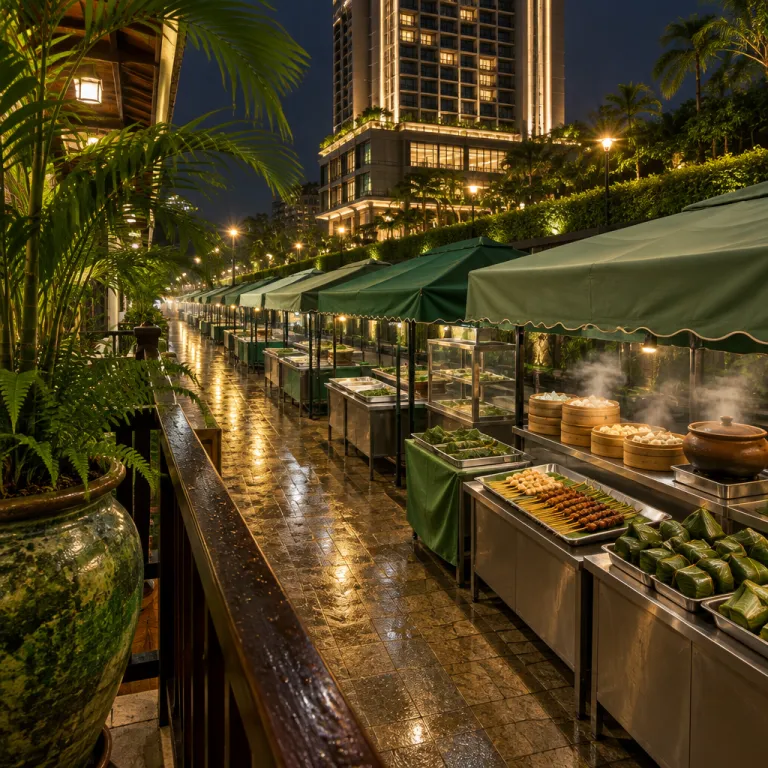
Why Malaysia’s night markets belong in every luxury itinerary
Step out of the marble lobby and into the glow of a Malaysian night market, where the best food of your trip may be plated on plastic. This Malaysia night market food guide is written for guests who sleep in five-star hotels but eat where the city breathes, turning a polished business stay into an unforgettable food night in the streets. Night markets are cultural hubs offering authentic experiences, and this is your ultimate guide to using them as a lens on Malaysia rather than a quick detour from Kuala Lumpur room service.
Compared with hotel restaurants, a Malaysian night market feels thrillingly unscripted, with food stalls lining every street and smoke curling around neon signs. You swap sommelier pairings for condensation beading on a coconut shake, and white tablecloths for wipe-clean tables that host some of the country’s most important dishes. The contrast is exactly why luxury travelers now plan stays around street food, treating a curated Malaysia night market food guide as seriously as any Michelin list, and asking concierges for specific hawker recommendations rather than defaulting to in-house fine dining.
Global icons such as Shilin Night Market in Taipei or Jemaa el Fnaa in Marrakech show how powerful these spaces can be, and Malaysia’s own markets belong in that same conversation. Travel And Tour World notes that night markets worldwide promote local businesses, preserve cultural heritage and provide unique experiences, and Malaysia’s versions do this with particular intensity. When you step into a night market in Penang, Kuala Lumpur, Market Melaka or Kota Kinabalu, you are entering the country’s real dining room, not a themed approximation, with regulars returning to the same stalls week after week.
Jalan Alor and Bukit Bintang: Kuala Lumpur’s essential night market crawl
In Kuala Lumpur, the classic first stop is Jalan Alor, a dense food street that runs behind the bright hotels and malls of Bukit Bintang. By early night the road closes to traffic and becomes a river of tables, with food stalls on both sides grilling satay, tossing noodles and stacking plates of Alor food faster than any hotel kitchen could manage. This guide treats Jalan Alor not as a tourist trap but as a living dining room for the city, especially once you step beyond the loudest touts and walk toward the quieter middle section near the intersection with Changkat Bukit Bintang.
Start your crawl at the Bukit Bintang end of Jalan Alor while the sky is still light, then walk the full length of the street before choosing where to sit. Look for busy food stalls with high turnover, short menus and locals sharing tables, then order a spread that might include smoky char kuey teow, sticky grilled chicken wings and a cooling coconut water served straight from the shell. Many restaurants here stay open from late afternoon until well past midnight, but the best balance of atmosphere and freshly cooked street food usually comes between 19.00 and 21.00, when the grills are roaring and the city’s humidity softens into something almost cinematic.
Luxury hotels in Kuala Lumpur increasingly embrace this street culture, with concierges mapping out a personalised food jalan plan that might pair Jalan Alor with a late drink overlooking the Twin Towers. A concierge at a five-star property in Bukit Bintang might, for example, suggest starting with chicken wings at Wong Ah Wah, moving on to grilled stingray at a neighbouring stall and ending with dessert back at the hotel lounge. For a deeper restaurant perspective on how hotel dining and hawker heritage intersect in the capital and in Penang, read our analysis of the Michelin Guide KL and Penang and what it reveals about hotel dining culture.
Penang, Melaka and Kota Kinabalu: regional night markets with serious flavour
Penang’s reputation as a food city is fully earned, and any Malaysia night market food guide for luxury travelers must treat it as a destination, not a side trip. Along Gurney Drive and New Lane, food stalls cluster into open-air courts where assam laksa, Hokkien mee and char kuey teow define what street food can be, with queues that move quickly because every dish is cooked at a fierce pace. Here the line between restaurant and stall blurs, and many guests from nearby hotels eat at the same plastic tables as office workers and families, sharing a food street that feels like a nightly festival.
In Melaka, the Jonker Street night market turns the heritage core into a walking route of snacks, crafts and music, making it ideal for travelers who want both shopping and food in one compact area. On weekend nights the Market Melaka scene stretches along the entire street, with apam balik, grilled seafood and coconut desserts sold from carts that roll in as the sun drops behind the river. Luxury properties along the riverfront often arrange early transfers so guests can visit the market before it becomes too crowded, then retreat to quieter hotel bars once they have their favourite dish locked in.
Across the South China Sea, Kota Kinabalu offers a different style of night market, focused on seafood and the sunset over the waterfront. Here, rows of food stalls display the day’s catch on ice, and you choose your fish or prawns before they hit the grill, a ritual that feels closer to a private tasting than a casual meal. For travelers used to polished hotel restaurants, these markets show how Malaysia’s regional cities translate their coastal abundance into nightly open-air dining rooms that rival any resort buffet, especially at the Filipino Market and the nearby night food bazaar along Jalan Tun Fuad Stephens.
How luxury hotels help you eat like a local, safely and stylishly
High-end hotels across Malaysia now treat night markets as extensions of their own culinary programs, not as competition, and that shift benefits discerning guests. Concierges in Kuala Lumpur, Penang, Melaka and Kota Kinabalu routinely curate a personalised Malaysia night market food guide, complete with annotated maps, must-try dishes and suggested timings for each area jalan. Some properties even arrange guided food walks, where a local expert leads you through the busiest food stalls while the hotel car waits nearby for a swift return.
Food safety is a common concern for first-time visitors, yet the reality on the ground is more reassuring than many expect when they step away from hotel restaurants. Choose food stalls with strong turnover, where you can see dishes cooked to order over high heat, and prioritise hot food over items that sit at room temperature, especially during the most humid part of the night. Carry hand sanitiser, avoid ice if you are particularly sensitive and remember that locals also eat at these markets nightly, which is the best real-world endorsement any guide can offer.
Payment is increasingly flexible, with many stalls now accepting digital wallets alongside cash, though carrying small notes in the local currency remains wise for faster service. Some luxury hotels will advance small amounts of cash for guests heading to a night market, then add the total to the room bill, a discreet service that keeps your wallet light and your focus on the next dish. If you book market tours or experiences through affiliate links on a hotel booking platform, the site may earn a small commission or earn a small referral fee, yet the best operators make clear that recommendations are based on quality, not on payouts.
Practical tactics for photographing, timing and pairing markets with your stay
Arriving early is the single smartest tactic in this Malaysia night market food guide, especially for travelers used to structured hotel dining. Aim to reach major markets such as Jalan Alor, Gurney Drive or Jonker Street by 18.00, when stalls are fully open but crowds are still manageable and the light is soft enough for a flattering photo of your first dish. This timing also lets you walk the full length of each street before committing, turning the market into a progressive tasting menu rather than a rushed search for any available table.
Photography matters for many luxury travelers, and night markets reward a thoughtful approach that respects both vendors and fellow diners. Ask before taking a close-up photo of a cook at work, avoid blocking narrow lanes and remember that steam, smoke and neon can be your best allies for atmospheric images of street food in motion. Some guests even coordinate outfits with their hotel rooms in mind, changing into lighter clothes before heading out so they can move comfortably between food stalls while still looking polished when they return to the lobby.
Pairing markets with your hotel schedule turns a simple outing into a highlight of your stay, especially on business trips with limited free time. In Kuala Lumpur, for example, you might schedule a late meeting near the Twin Towers, then have the hotel car drop you at Bukit Bintang so you can visit Jalan Alor before returning to your suite. For more ideas on how to weave hawker culture into a refined itinerary, including options in Johor Bahru that complement KL and Penang, see our guide to refined food experiences in Johor Bahru for discerning hotel guests.
From global icons to Malaysian must eats: what to order first
Every Malaysia night market food guide eventually comes down to one question, asked by guests who usually rely on tasting menus and hotel concierges. What should you eat first when you finally sit at that plastic table, surrounded by the noise of the city and the glow of a hundred stalls? The answer depends on where you are, but a few dishes form a reliable framework for understanding how Malaysia translates its multicultural heritage into street food.
In Kuala Lumpur and Penang, start with nasi lemak, the national dish of coconut rice, sambal, peanuts and anchovies, which appears in both humble food stalls and more polished restaurants. Follow it with something from the grill, whether satay skewers in Jalan Alor, seafood in Kota Kinabalu or smoky chicken wings in the Market Melaka scene, then finish with a sweet such as apam balik or shaved ice drenched in coconut milk. This sequence mirrors the way locals often eat at a night market, moving from savoury to sweet while drifting along the street, and it works just as well for travelers stepping out from luxury hotels.
Global benchmarks help frame expectations, and the dataset on night markets worldwide offers useful context for Malaysian travelers. Shilin Night Market in Taipei is renowned for diverse street food and shopping, while Jemaa el Fnaa in Marrakech is a vibrant market with food, performers and crafts, and Chatuchak Weekend Market in Bangkok is frequently cited as one of the world’s largest weekend markets. Those examples show how markets everywhere blend food, shopping and performance, yet Malaysia’s versions add a distinctive layering of Malay, Chinese and Indian influences that reward repeat visits and careful, appetite-led planning.
FAQ
Are Malaysia’s night markets safe for luxury travelers to visit
Malaysia’s major night markets in Kuala Lumpur, Penang, Melaka and Kota Kinabalu are generally safe, including for guests staying in high-end hotels. Exercise the same precautions you would in any busy city, such as keeping valuables close, avoiding isolated alleys and using registered taxis or hotel cars for late-night returns. As global experts note, night markets are generally safe; exercise standard precautions, and you will be able to focus on the food rather than on security concerns.
What is the best time to visit Jalan Alor and other major markets
The most comfortable window for Jalan Alor, Gurney Drive and Jonker Street usually runs from 18.00 to 21.00, when stalls are fully open but crowds have not yet peaked. Arriving early lets you walk the entire street, assess which food stalls look busiest and cleanest, then settle in before the late-night rush. Guests who prefer a quieter experience can also visit on weekdays rather than weekends, when the atmosphere is still lively but slightly less intense.
How should I handle payments and tipping at Malaysian night markets
Cash in the local currency remains the most reliable option at Malaysian night markets, although more stalls now accept digital wallets and QR code payments. Bring small notes to make transactions smoother, and do not expect to use credit cards at individual food stalls, even in central Kuala Lumpur. Tipping is not mandatory, but rounding up the bill or leaving a small extra amount for excellent service is always appreciated.
Can I trust the hygiene standards of Malaysian street food stalls
Many Malaysian street food vendors operate to high informal standards, especially in busy markets where locals eat nightly and poor hygiene would quickly damage reputations. Choose stalls with strong turnover, visible handwashing, clean cooking surfaces and food cooked to order over high heat, which significantly reduces risk. If you have a sensitive stomach, start with simpler dishes such as grilled meats or nasi lemak, and ask your hotel concierge for specific recommendations on reliable vendors.
How do Malaysia’s night markets compare with famous markets abroad
Malaysia’s night markets share core traits with global icons such as Shilin Night Market in Taipei or Jemaa el Fnaa in Marrakech, including dense clusters of stalls, strong street food cultures and a mix of shopping and entertainment. The key difference lies in Malaysia’s unique layering of Malay, Chinese and Indian culinary traditions, which produces a wider range of dishes in a relatively compact area. For luxury travelers, this means you can sample an unusually broad spectrum of flavours in a single evening, often within a short drive of your hotel.